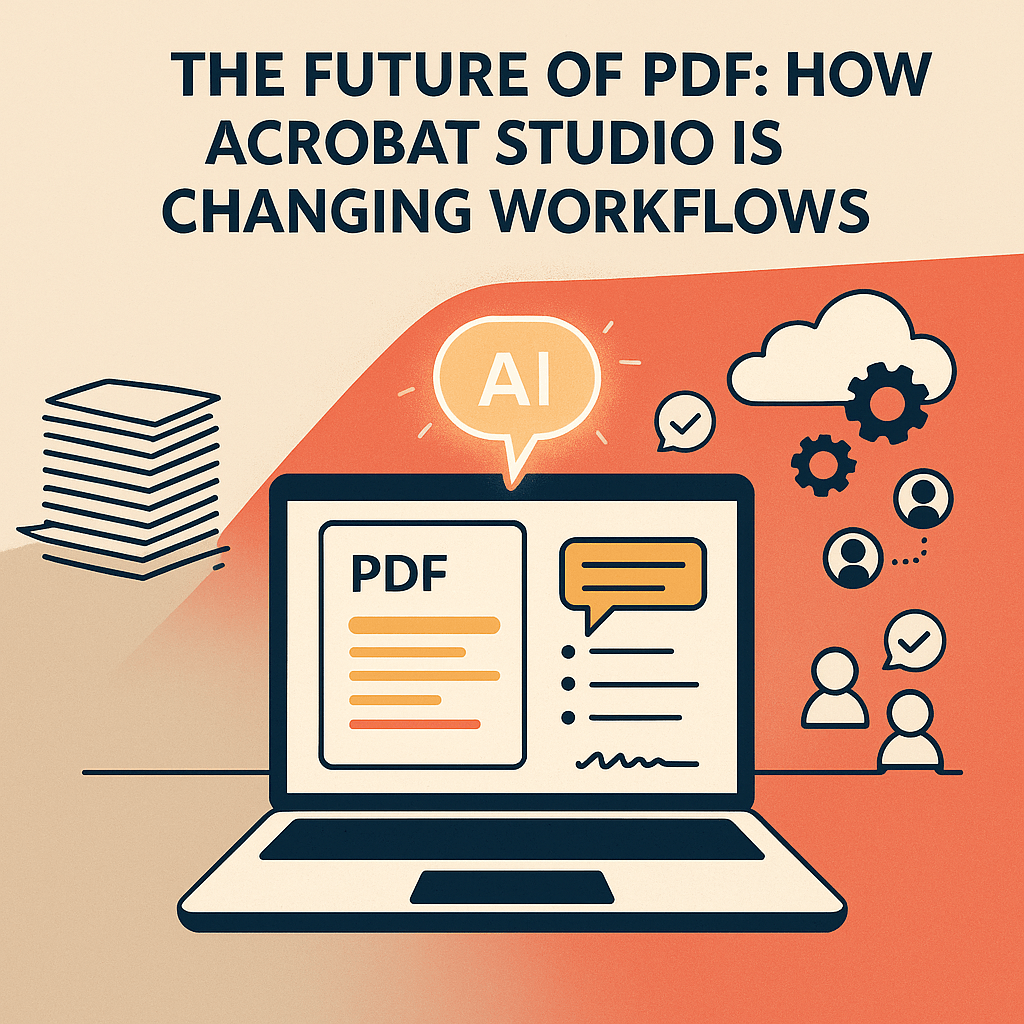
PDFs have been the universal format for documents for more than 30 years. But until now, they’ve mostly been static files — reliable for viewing and sharing, but not built for interaction. With the launch of Adobe Acrobat Studio, that’s changing. The PDF is no longer just a file format — it’s becoming a dynamic workspace powered by AI.
Here’s how Acrobat Studio is redefining the future of PDF.
📌 AI-Powered Interaction
Instead of reading line by line, users can now chat with PDFs. By asking questions, requesting summaries, or extracting tasks, you engage with documents in ways that weren’t possible before.
📌 Smarter Collaboration
With built-in sharing and commenting, PDFs transform into collaborative spaces. Teams no longer have to pass around multiple versions — Acrobat Studio keeps everyone aligned in real time.
📌 Seamless Conversions
PDFs can now become presentations, spreadsheets, or editable Word documents with formatting intact. This flexibility makes the PDF more than just an end format — it becomes a starting point for new workflows.
📌 Accessibility for All
Acrobat Studio makes information more inclusive by simplifying text for different reading levels and generating summaries that work for every audience.
📌 PDFs as Dynamic Hubs
The biggest shift is seeing PDFs as interactive hubs. From legal contracts to study notes, they can now drive action, generate insights, and support decision-making.
✅ Final Thoughts
The future of PDFs is interactive, intelligent, and collaborative. With Acrobat Studio, Adobe is transforming the way documents are created, shared, and used — making workflows faster, smarter, and more inclusive.
🔗 Try Acrobat Studio Today
Want to see the future of PDFs in action? Start with Adobe Acrobat Studio here and experience the next generation of document workflows.


 Acrobat Studio Pro