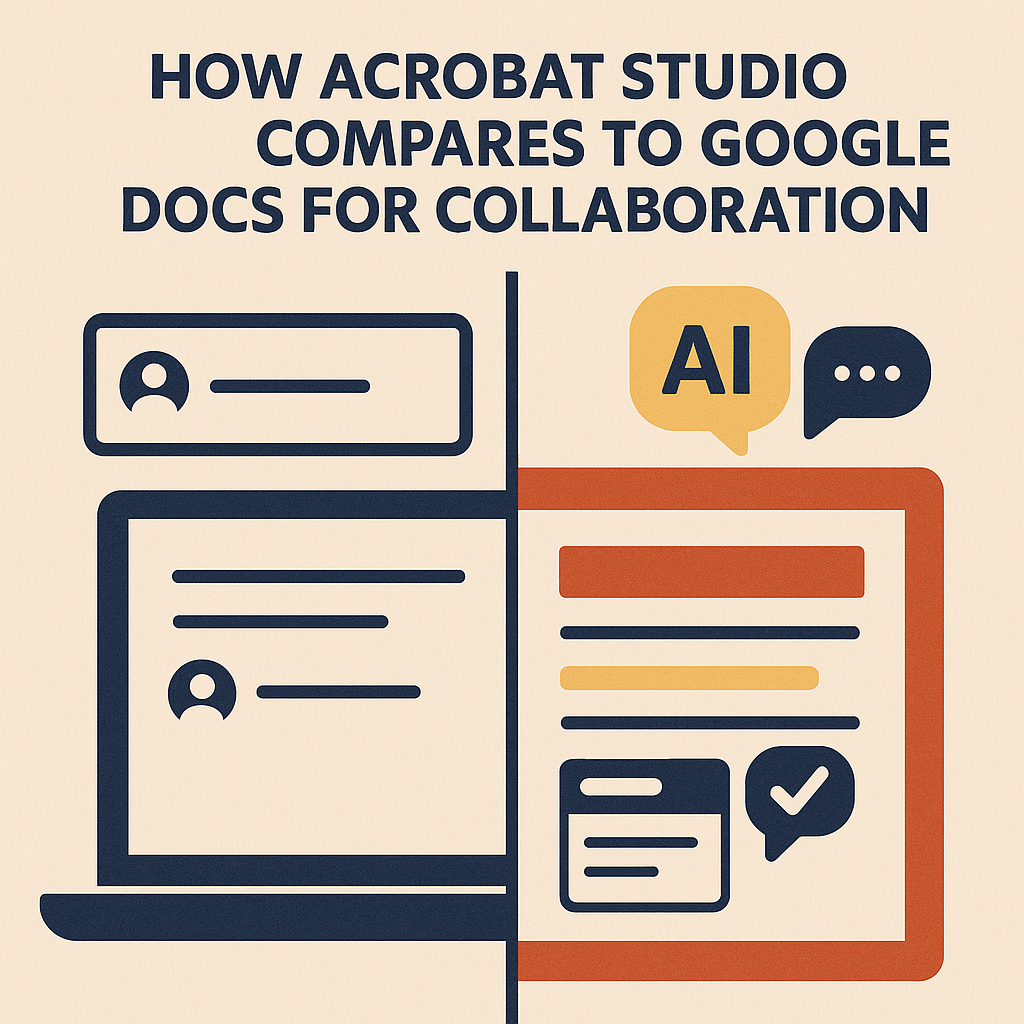
When it comes to collaboration, many teams rely on Google Docs for real-time editing. It’s simple, cloud-based, and widely accessible. But when the task involves PDFs, Google Docs often struggles to maintain formatting, security, and consistency.
That’s where Adobe Acrobat Studio steps in—bringing the collaborative ease of Google Docs into the world’s most trusted file format.
Google Docs: Strengths and Limitations
Strengths:
- Real-time collaboration with multiple users
- Easy to share and comment
- Cloud-based, accessible anywhere
Limitations:
- Formatting issues when importing/exporting PDFs
- Limited security and compliance features
- Not designed for contracts, reports, or formal documents
Acrobat Studio: Collaboration Built for PDFs
Unlike Google Docs, Acrobat Studio is designed specifically for PDF workflows:
- PDF Spaces – Shared environments where teams collaborate on one version.
- AI Summarization – Condense long reports into quick takeaways.
- Smart Annotations – Context-aware comments and highlights.
- Action Item Extraction – Pull out deadlines and responsibilities automatically.
- Enterprise-Grade Security – Protect sensitive documents with advanced redaction and permissions.
Side-by-Side Comparison
| Feature | Google Docs | Acrobat Studio |
|---|---|---|
| Real-time collaboration | ✅ | ✅ (PDF Spaces) |
| Works with PDFs | ❌ (limited) | ✅ |
| AI-powered tools | ❌ | ✅ |
| Document fidelity | ❌ | ✅ |
| Security & compliance | Basic | Advanced |
When to Use Each
- Google Docs: Great for drafting informal content or brainstorming.
- Acrobat Studio: Best for final documents—contracts, policies, reports, or training materials—where accuracy, security, and collaboration matter.
Key Takeaway
Google Docs is perfect for drafts, but Acrobat Studio makes PDFs collaborative, intelligent, and secure—bridging the gap between flexibility and reliability.
Try Acrobat Studio Free
Upgrade your document collaboration today. Start your free trial of Adobe Acrobat Studio and see how it compares to Google Docs.


 Acrobat Studio Pro